Why Night Shift Workers Make Up To 30% More Mistakes.
Here's What's Actually Happening To Your Brain On Nights.

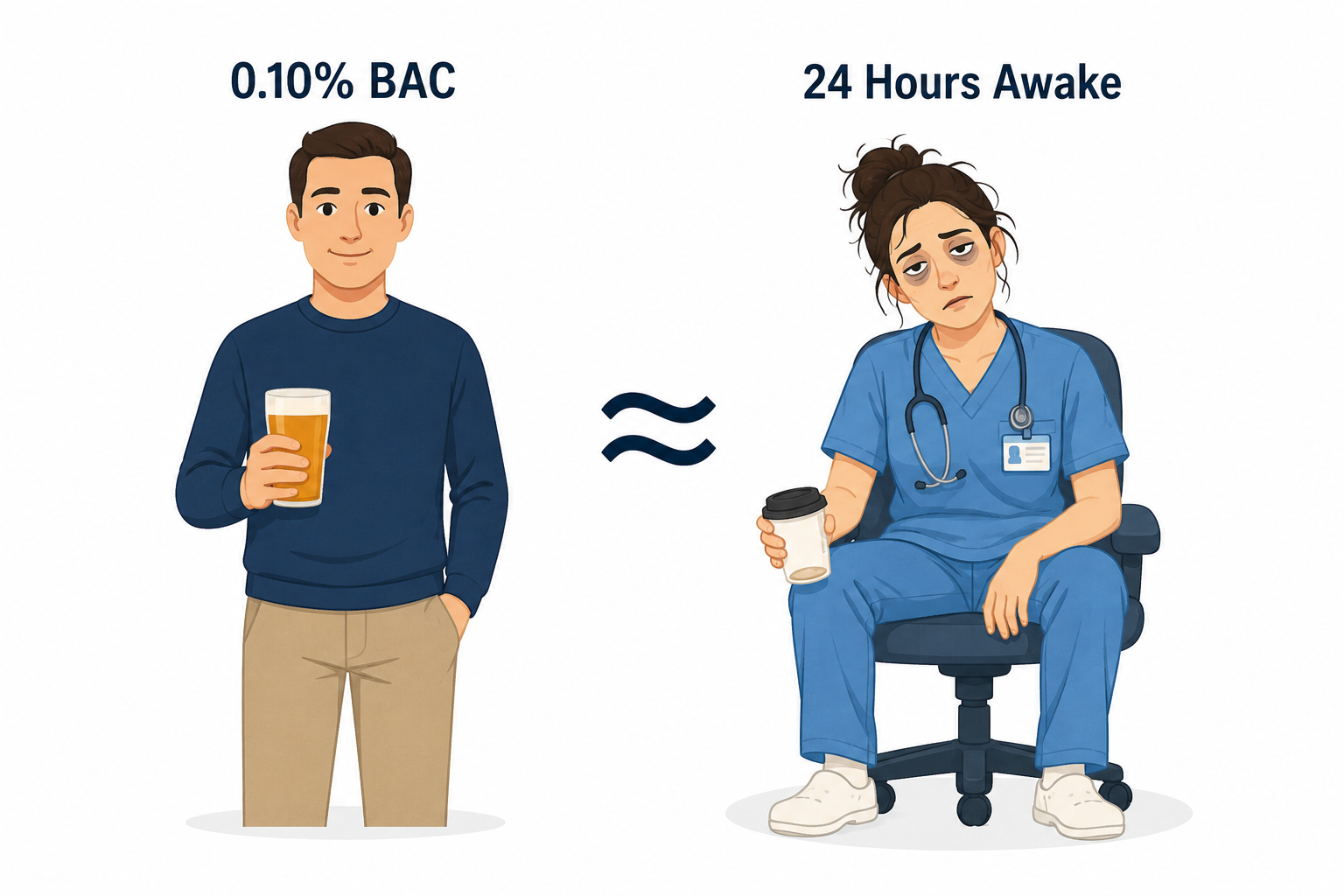
Night shift workers are 30% more likely to make a mistake than those on day shifts.
Not because we're careless. Not because we're worse at our jobs.
Thirty percent. Just for working the hours everyone else is asleep.
That's not an opinion. It's OSHA's own data.
Most shift workers never find out why.
You're about to.

Check what applies
Before we go further, be honest with yourself. How many of these are true for you?
- Coffee has stopped working the way it used to
- You feel foggy for a full day after a block of nights
- Your days off belong to recovery before they belong to you
- You second-guess yourself at work in ways you never used to
- The drive home genuinely scares you on the bad nights
- Someone close to you has said you don't seem like yourself
- You've tried supplements before and nothing worked
- You feel like you're ageing faster than everyone on days
If you checked more than three, keep reading. Because what follows explains all of them.
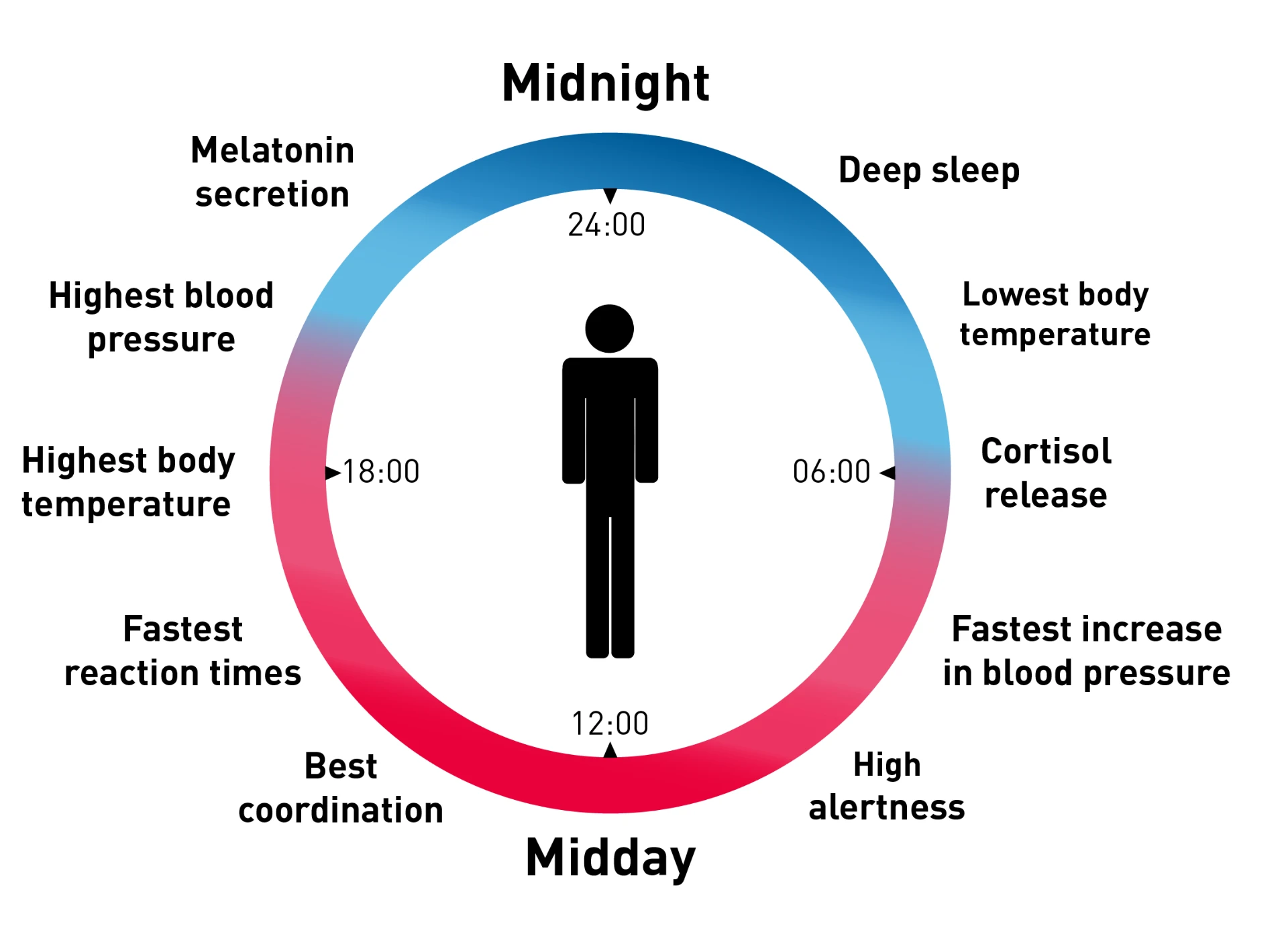
Your body runs on a clock. A real one. A roughly 24-hour internal rhythm that controls when you sleep, when you wake, when hormones release, when your body repairs itself.
It's set by light and dark. Light means day. Be awake. Dark means night. Wind down. Repair.
For millions of years that clock has run the same way. Then we started working nights.
And we asked our bodies to be wide awake, under bright lights, at the exact time every cell expects darkness.
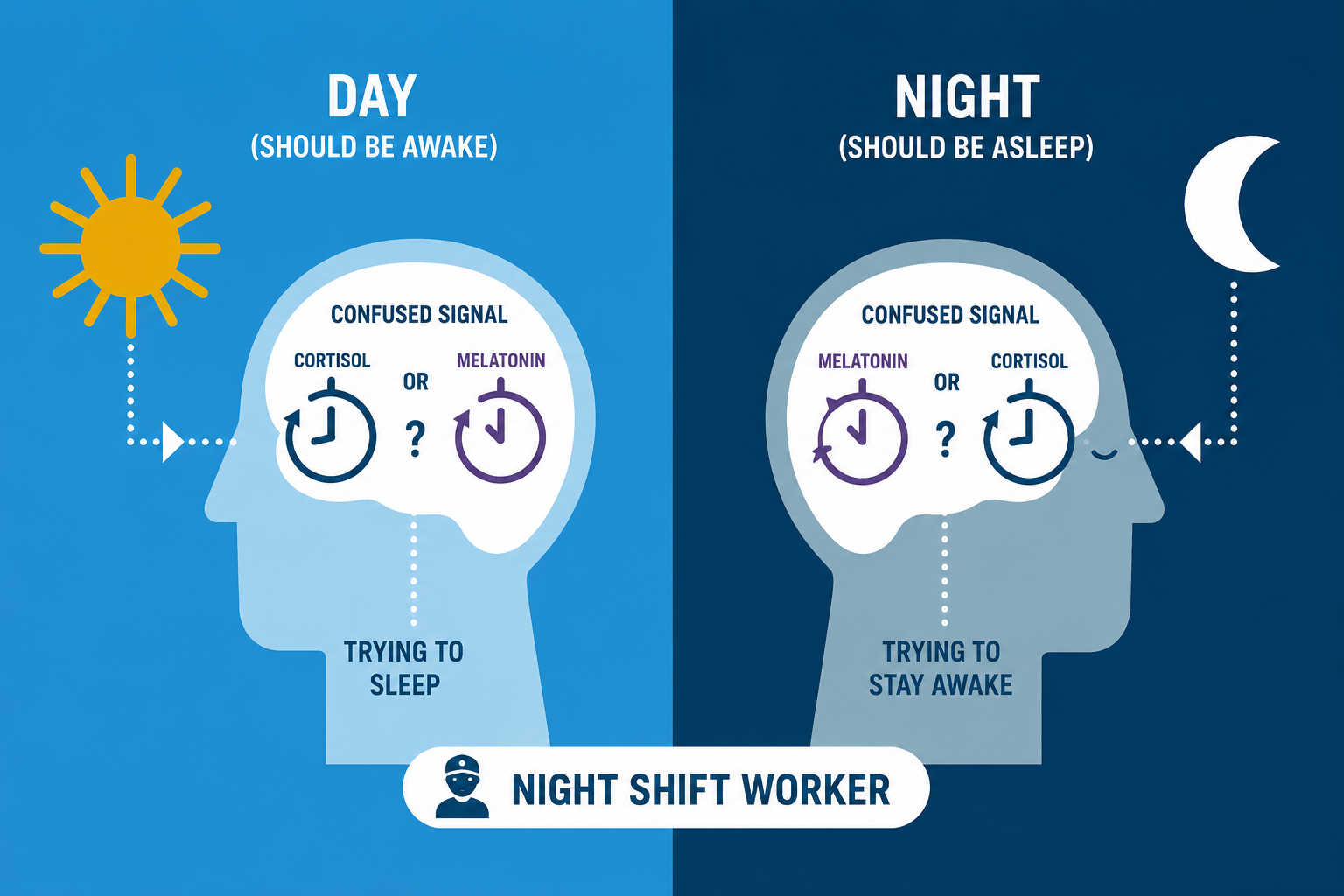
Your clock doesn't just adjust. It can't. The master clock in your brain gets dragged one way. The clocks in the rest of your body lag behind. Nothing is synchronised anymore.
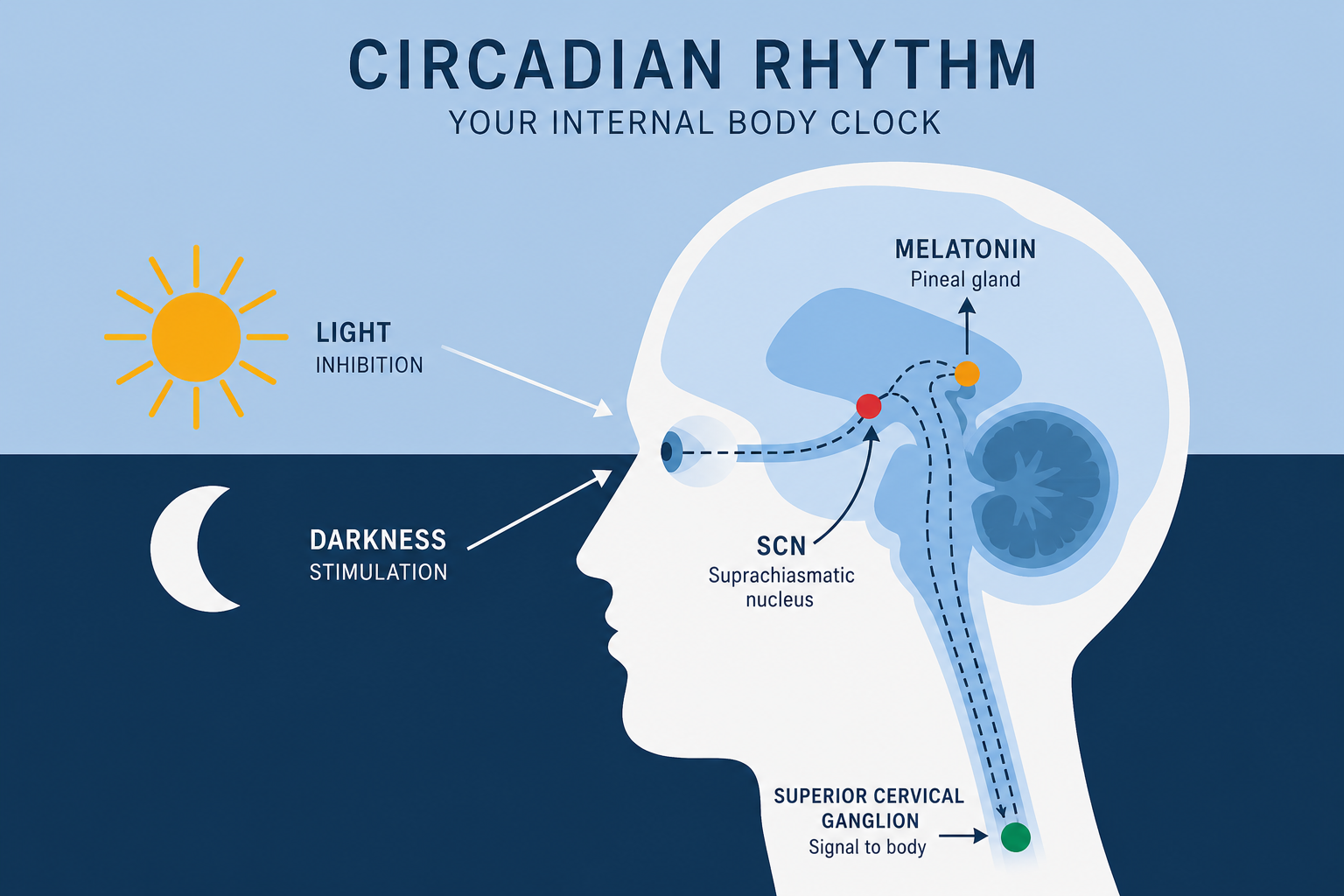
Your hormones fire at the wrong times. Melatonin, which normally rises at night, gets suppressed by the light. Your repair cycles get interrupted.
This is called CIRCADIAN DISRUPTION. And it's not a small thing. Working against your body clock, shift after shift, year after year, does real, measured damage to how your brain performs.
That's not fear-mongering. It's documented.
It gets worse than tired
The CDC's own training material lays it out plainly.
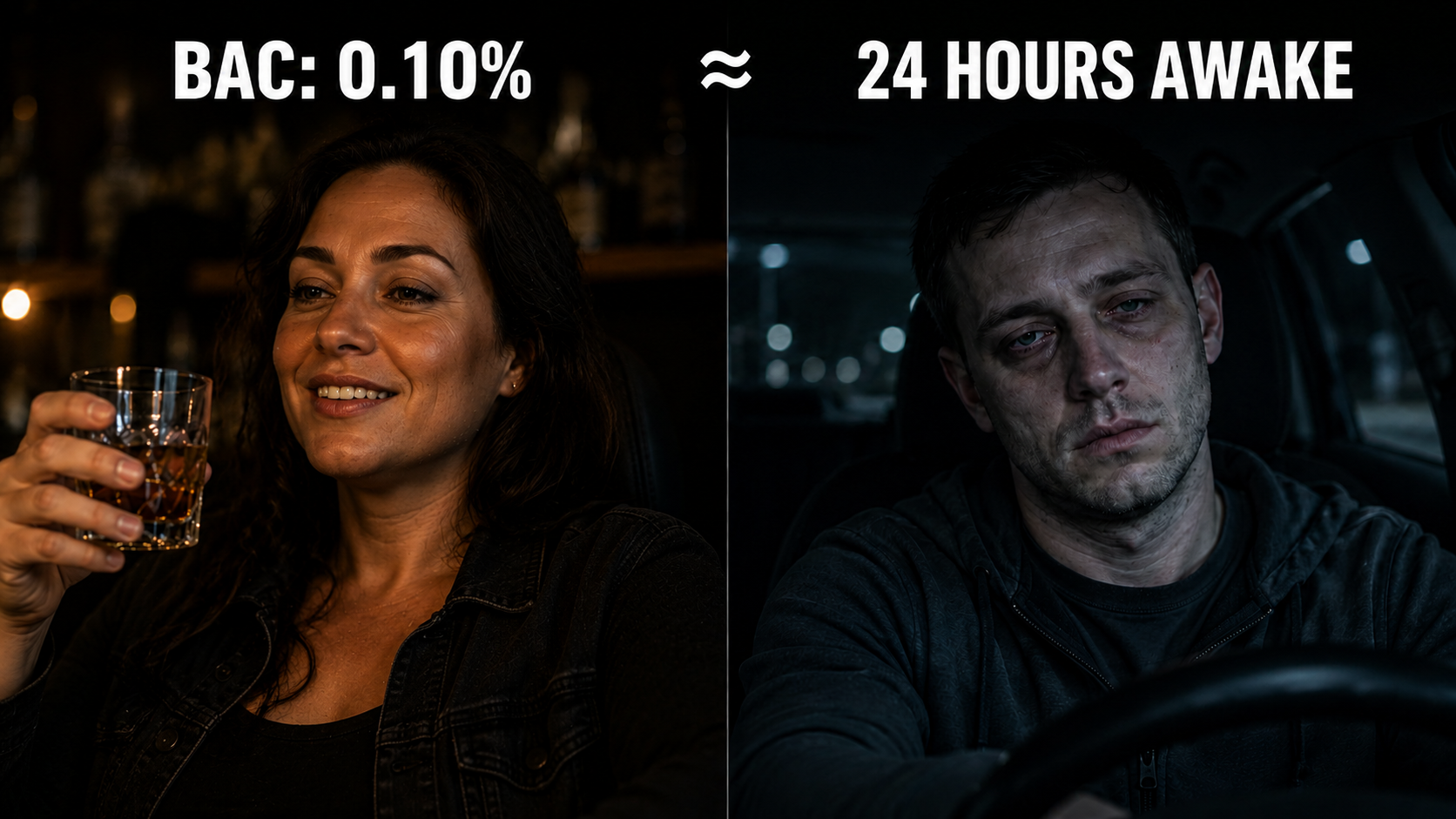
Stay awake for 17 hours, and your performance drops to the same level as someone with a blood alcohol concentration of 0.05%.
Stay awake for 24 hours, and you're at 0.10%. That's above the legal drink-drive limit in the US.
Read that again.
By the back half of a long night shift, the science says your brain is performing as if you'd been drinking.
That's not a metaphor. That's the CDC.
And suddenly the 30% makes complete sense. Of course mistakes go up. Your brain is impaired at 3am the same way it would be after a few drinks.
But here's the question nobody answers.
Why?
Why does being awake at the wrong time do that to you?
What's actually happening inside your brain
Your brain runs on chemicals. A few of them matter most for shift workers.
Powers focus and the drive to start the next task. When it drops, everything feels like wading through concrete. That 3am feeling where you have to force yourself to move? That's dopamine.
Powers alertness and fast, accurate decisions. When it drops, your reaction time slows and your judgement gets shakier. Exactly what the 30% is made of.
Powers memory and recall. When it drops, you recheck, you retrace, you start asking yourself if you missed something.
Your nervous system's off switch. When it's depleted, you get home wrecked and still can't sleep. Lying there exhausted, watching the ceiling. That's not insomnia. That's depletion.
Your body normally replaces all of these while you sleep. But you're not sleeping. You're working.
So they drain faster than they can be refilled.
I started calling it the NIGHT SHIFT DRAIN. Because that's exactly what it feels like.
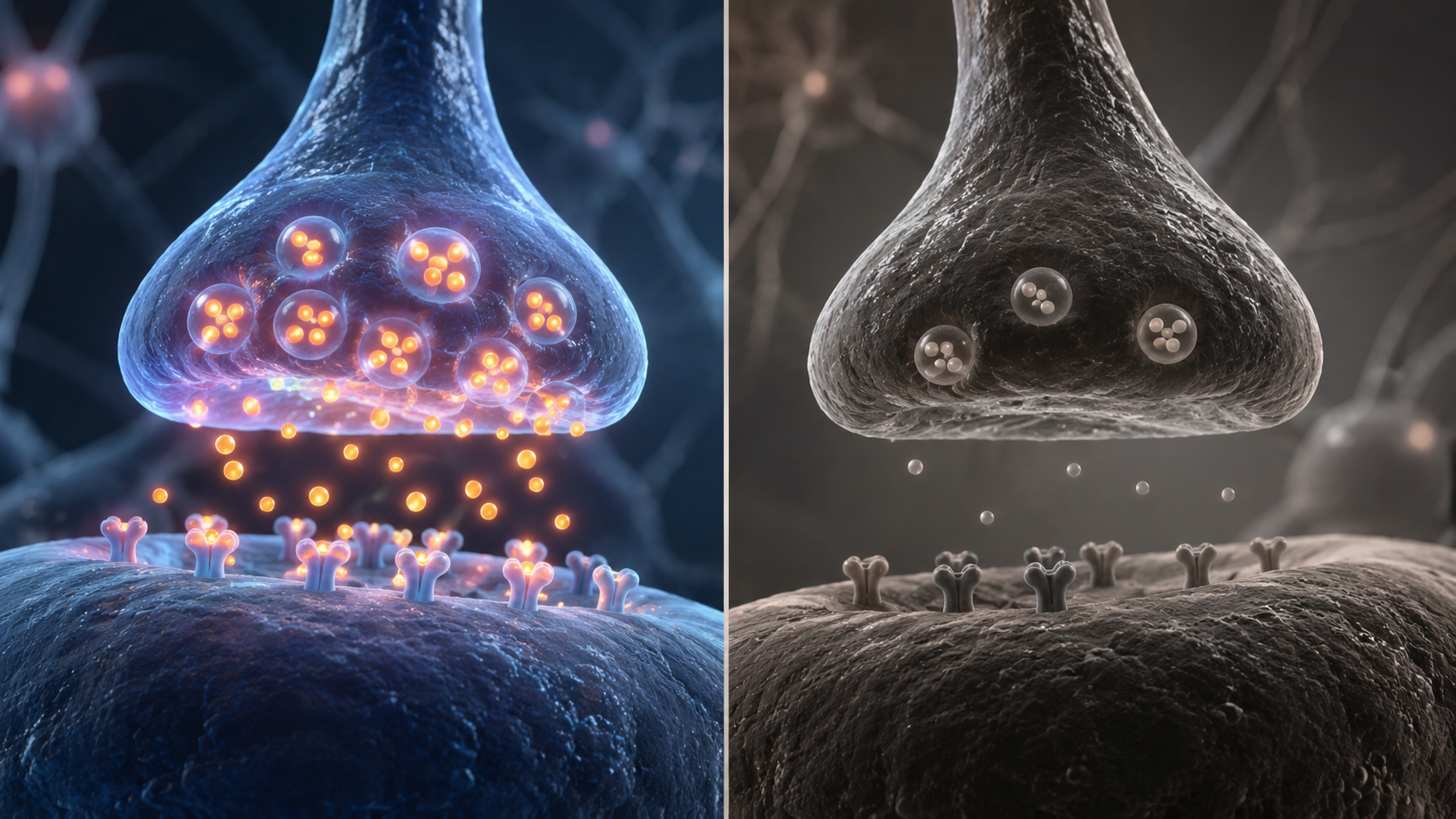
And here's the chain:
- 01Night shift begins. Your body expects sleep.
- 02Your brain is thrown into chaos.
- 03The chemicals behind focus drain faster than they refill.
- 04You drive home in daylight. Your body expects to be awake.
- 05Your brain is thrown into chaos again.
- 06The sleep you get is short and broken.
- 07The tank never refills.
Every shift. Every week. Every year. That's the NIGHT SHIFT DRAIN.
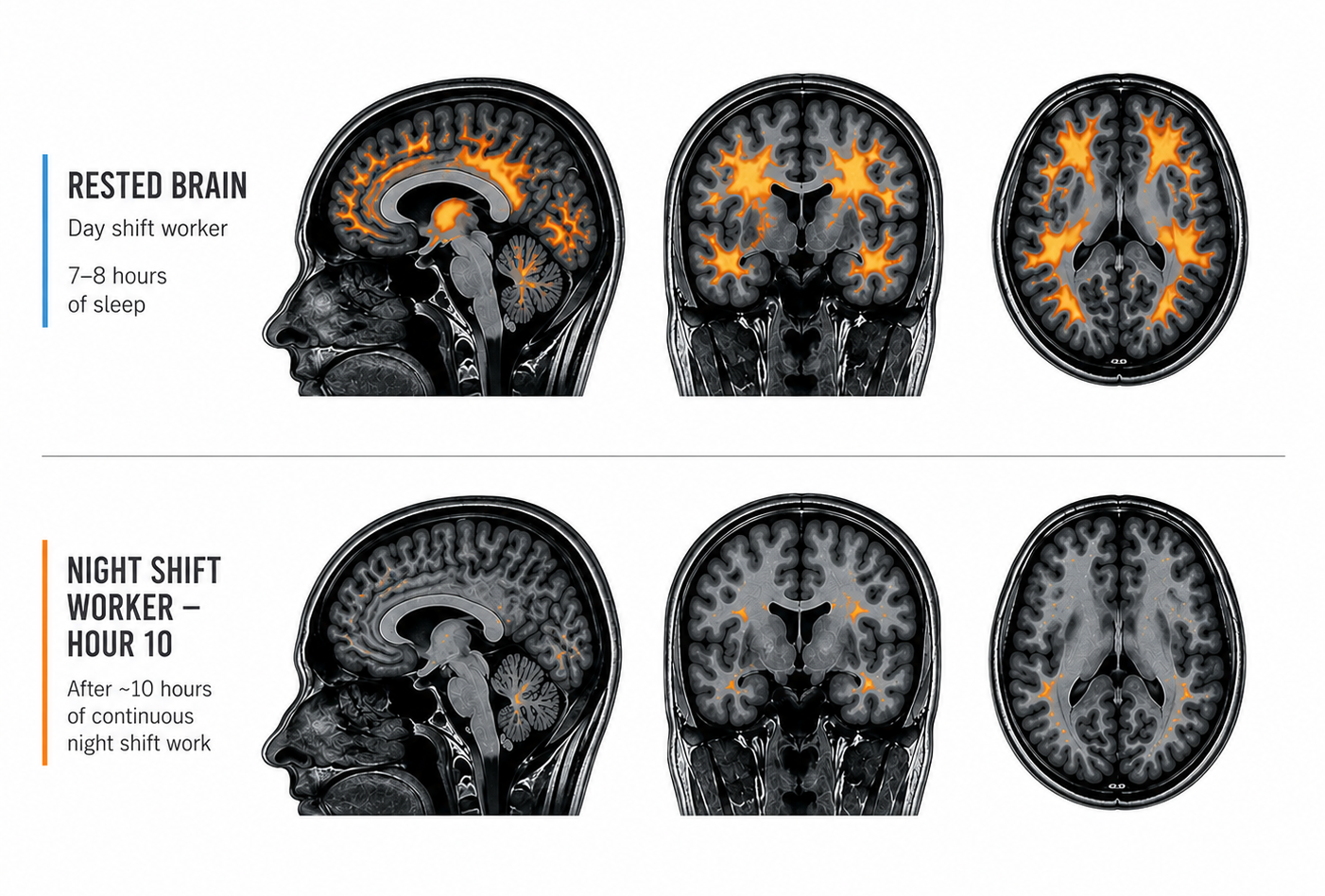
And it's not just focus
Night shift flips your cortisol too, the rhythm that's meant to drop at night and let you wind down.
In a shift worker, it's stuck on when it should be switching off.
That's why the flatness on your days off feels like more than tiredness. Why you can't fully switch on for the people you love.
And why you walk back in for your next shift already behind. Never fully recovered, running on empty before you've even started.
That's how the mistakes compound.
And do you know what everyone tells us to do about it?
"Just have another coffee."
That's it. That's the entire advice we get.
From an economy that runs 24 hours a day on the backs of night workers. That needs us awake at 3am to keep hospitals running, planes flying, power on, shelves stocked.
But has never once built anything to actually help us do it.
We keep the world running through the night. And we're handed a coffee machine and told to get on with it.
Meanwhile the entire supplement industry builds product after product for people who slept eight hours and just want a little edge. Rested people. Gym people. Morning people.
Nothing for the nurse at 4am. Nothing for the paramedic on their fourth night. Nothing for the offshore worker three weeks into a rotation.
We were skipped. Completely.

And here's the truth about the coffee
It was never going to work.
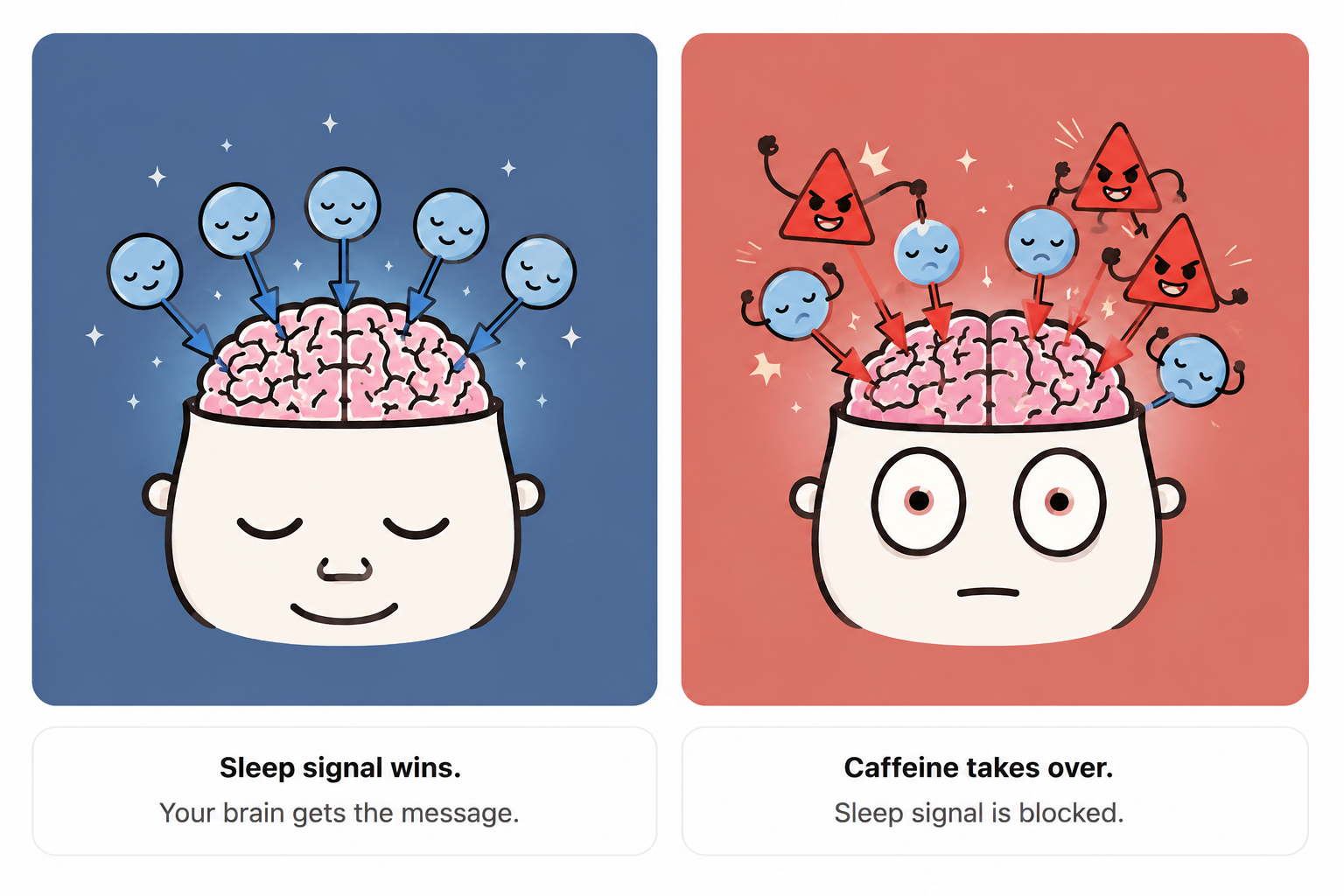
Coffee doesn't replace a single one of the chemicals night shift drains.
All it does is block the signal that tells you you're tired. The tiredness is still there. The drain is still happening. Coffee just puts tape over the warning light.
That's why the first coffee works and the fourth does nothing.
That's why you can be wired and exhausted at the same time.
That's why the fog always comes back, no matter how much caffeine you throw at it.
You weren't failing. You were using the wrong tool for a problem nobody ever explained to you.
Now let me tell you the good part
The fog. The 3am wall. The days off lost to recovery. Not trusting your own brain.
That part, you can do something about.
You can be sharp at 3am again. You can finish a shift with something left in the tank. You can get your days off back.
Not by fixing your schedule. Not by working harder. By putting back what the shift keeps taking.
That's the whole reason I'm writing this.
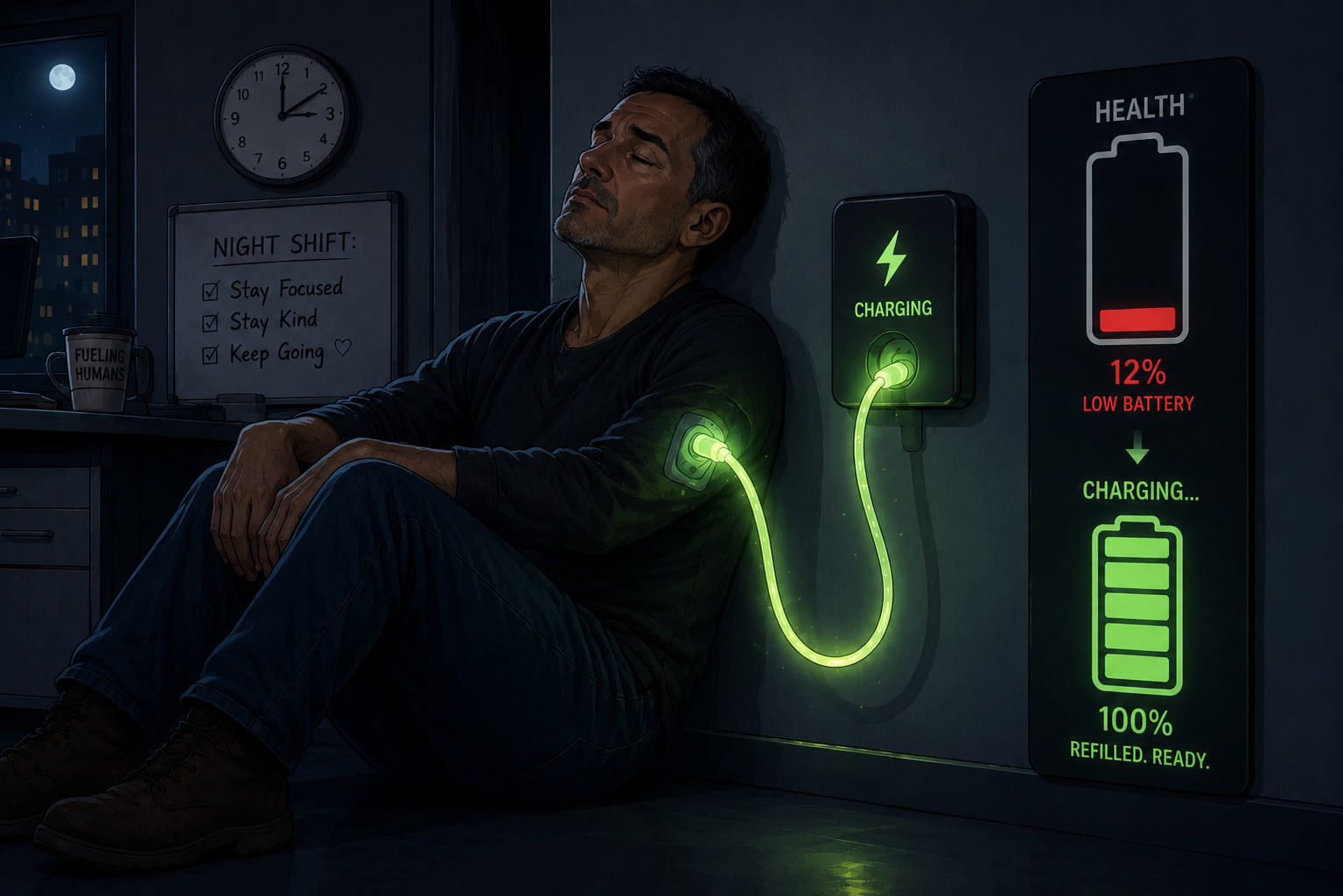
I went looking for something that works
Not in Walmart. In the research.
I read everything I could find on what night shift does to the brain, and which ingredients had real evidence behind them for the exact state we work in. Sleep deprived. Circadian disrupted. Running on empty at 3am.
And what I learned is that most shift workers fall into the same trap. Trying to fix one piece at a time.
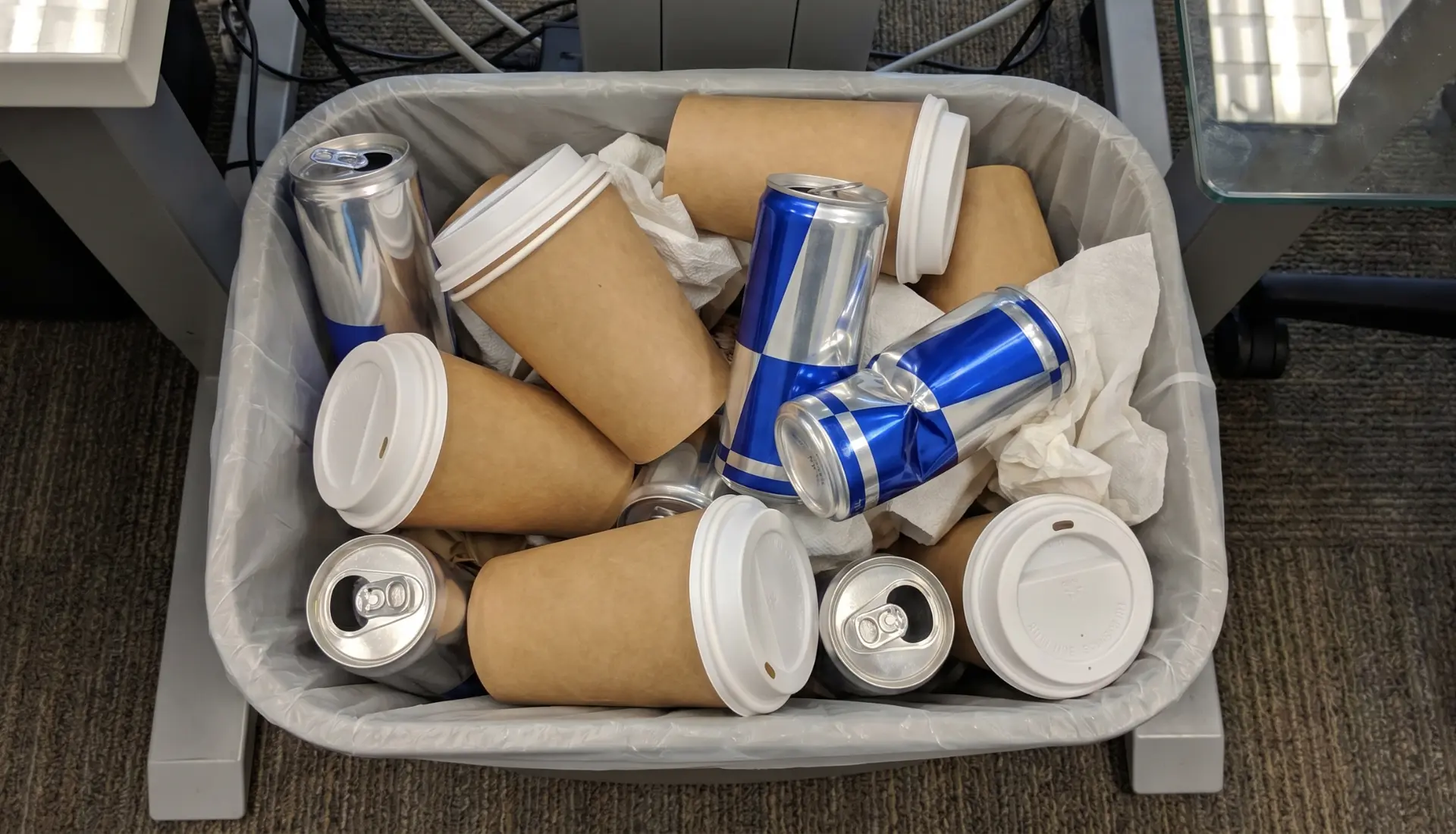
Coffee, to force alertness. But it does nothing for what's actually been drained.
A focus supplement, to think clearer. But it can't help you switch off when the shift ends.
Magnesium or a sleep aid, to finally rest. But it does nothing while you're on shift.
Better sleep habits. How's that one working for you?
Each one pulled on its own, hoping this would finally be the answer. But one at a time is never enough.
Because your brain on night shift needs four things at once.
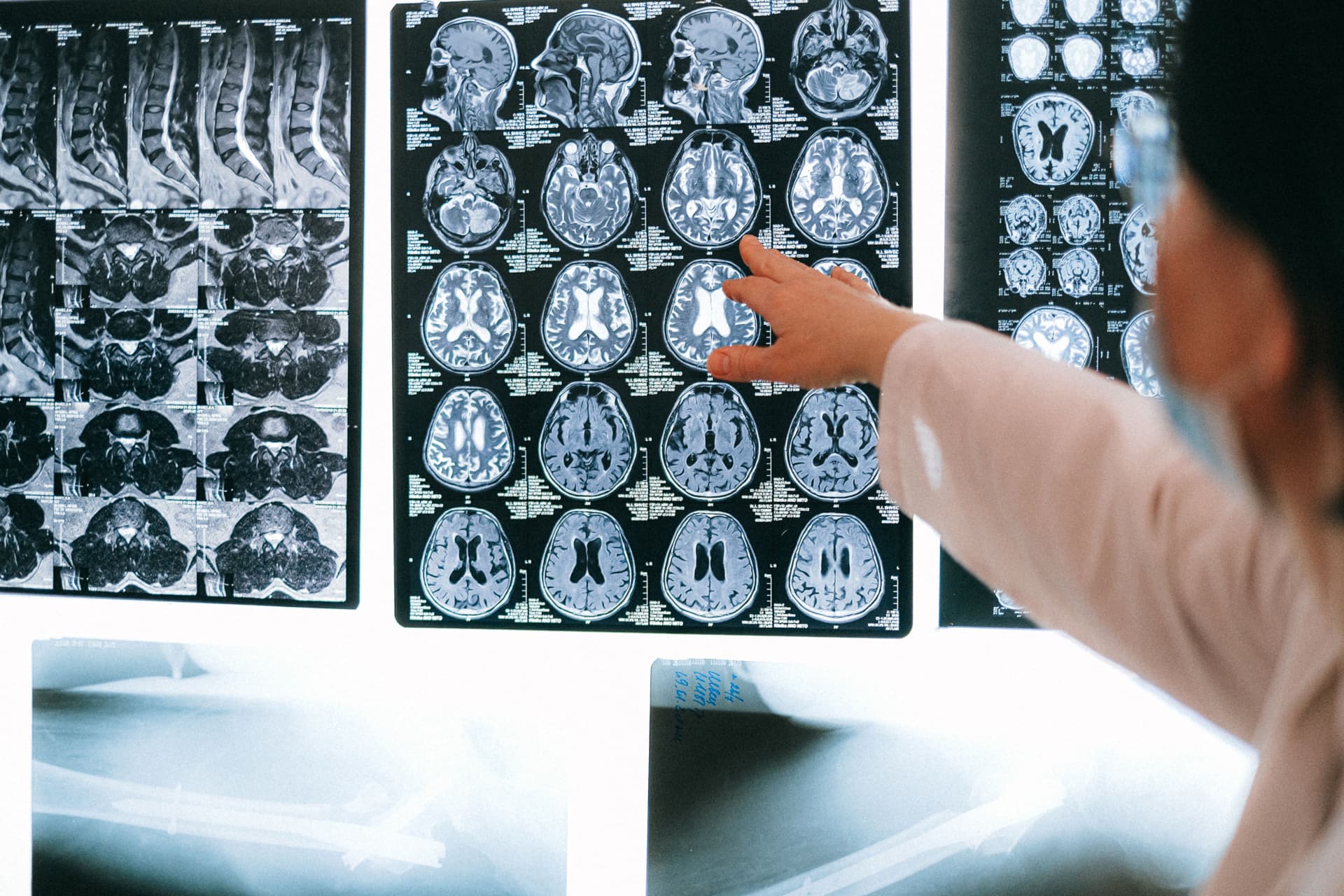
Replace what's drained. Sustain alertness. Calm the body after. Protect for the long haul.
Do all four together and the brain comes back. Do one alone and you're back where you started.
Not one thing on the shelf was doing all four. So that became the goal.
Night Shift Formula
Four jobs. One capsule.
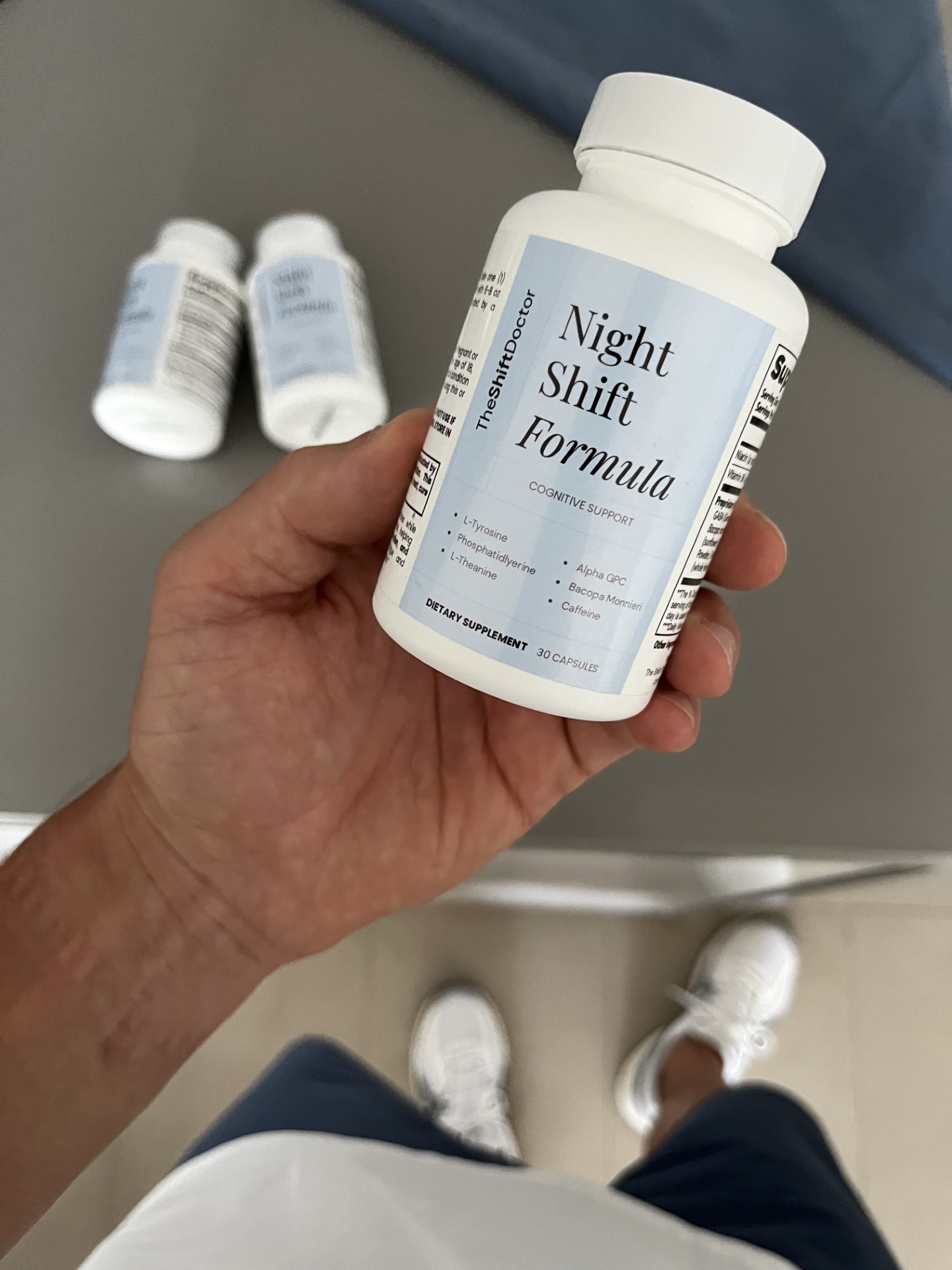
Built by two people who worked nights for 15 years. They lived the Night Shift Drain, couldn't find anything built for it, so they built it themselves.
One capsule, taken at the start of your shift. Here's what each part does, and the evidence behind it.
L-Tyrosine, the raw material your brain makes dopamine and norepinephrine from, the focus and reaction chemicals night shift drains first. Coffee can't replace them. L-Tyrosine can.
(Significant reduction in cognitive decline during overnight work vs placebo — Neri et al., 1995.)
Plus Alpha GPC and Huperzine A, both working on acetylcholine, the memory chemical behind the clarity and recall that go first at 3am.

A caffeine and L-theanine blend for steady focus with no spike and no crash.
(Tested on sleep-deprived adults; markedly greater improvement in reaction time than placebo.)
Plus Vitamin B6 and Niacin, the cofactors your body needs to turn raw materials into usable brain fuel.

Phosphatidylserine, with the strongest clinical evidence of any ingredient for lowering the cortisol response.
(35% reduction in cortisol response, double-blind, placebo-controlled — Starks et al., 2008.)
Plus GABA, your nervous system's off switch, so you can actually switch off when the shift ends.

Bacopa Monnieri, to support your brain over the years of nights still ahead. It builds over about 8 weeks, exactly the way the wear accumulated.
(8 of 9 double-blind RCTs showed significant improvements in memory and cognitive performance.)
Any one of these on its own is just another thing you've already tried. It's the four jobs, done together, at the start of every shift, that your brain's been waiting for.
Backed by a 30-day guarantee
The people who'd given up
I started telling the people I knew who'd all but given up. The ones who were sure this was just their life now. Too many years on nights, too worn down, too far gone to feel sharp again.
Here's what happened to them.
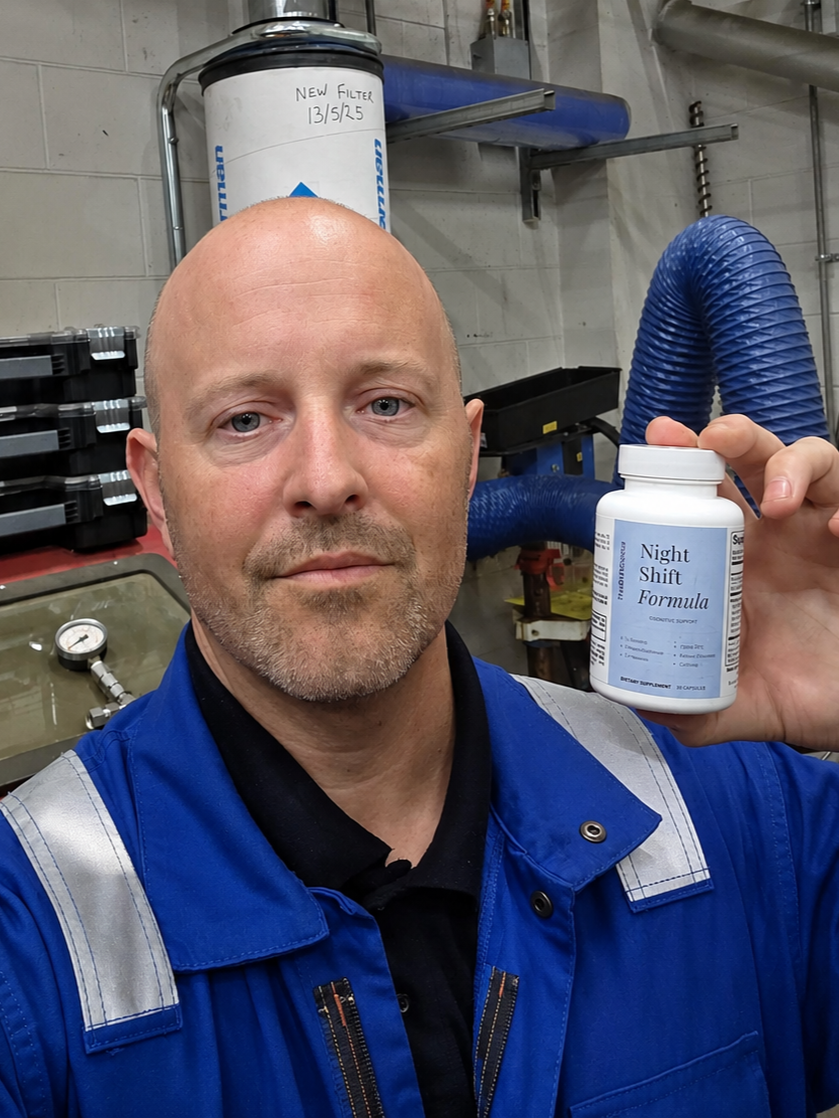
"The biggest benefit for me has been feeling more human again on my first day shift back after doing a few nights. The sustained energy is definitely there."
"I got to hour ten and realised I was still sharp. That hasn't happened in years."
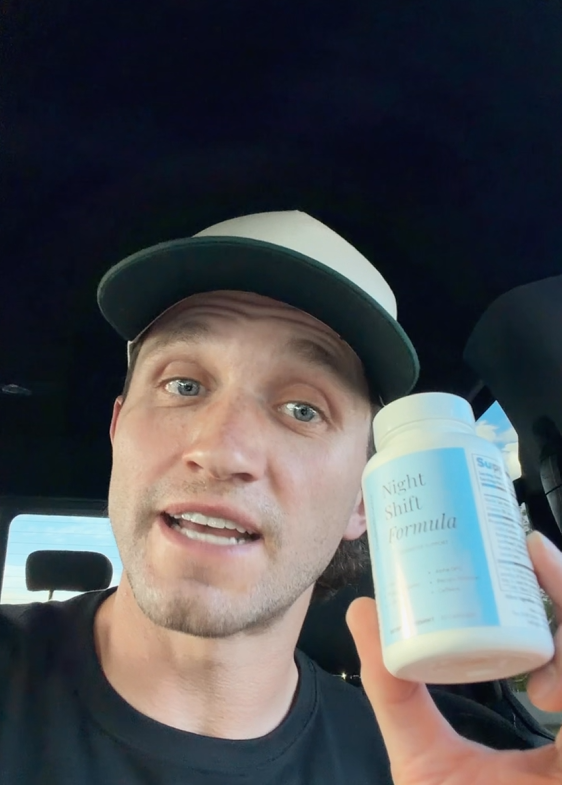
"I'm doing better the longer I take it. Thank you for making something healthy for us third shift workers."
The dream was never fireworks. The dream is to get to 3am and still feel like yourself. To finish a shift with something left. To get your days off back from something that's been quietly taking them for years.
That's what's actually on the table here.

"Week two and I got through my whole shift without that 3am crash. I actually drove home remembering the drive. Small thing. Felt huge."

"My wife noticed before I did. Said I came back from this rotation actually present instead of like a ghost. That's when I knew."

"I checked every ingredient before I ordered. It all holds up. Six weeks in and the back half of a night shift doesn't wreck me anymore."

"The swing from nights back to days used to take me my whole weekend. Now it's a day, maybe less. I got my days off back."

"Long flights to different time zones used to leave me groggy for days. This is the first thing that's actually touched it. On my third bottle."
Backed by a 30-day guarantee
If you want the numbers before you believe a word of this, good
You've been let down before. You've earned that skepticism honestly.
So here's what shift workers told us after they actually tried it.
felt less likely to make a mistake during a critical task.
noticed a decrease in brain fog at work.
got more real time with their families on their days off.
Notice what that last number really means. 93% got more real time with their families on their days off. Not just time. Present time.
Because the Night Shift Drain was never only the hours at work. It's the day off spent flat on the sofa recovering. Being in the room but not really there. The people you love getting the leftovers of you, week after week.
93% got that back.
You've spent a long time believing the fog is just who you are on nights. That it's the price of the job, and there's nothing to be done about it. The numbers say you're far more likely to be wrong about that than right.
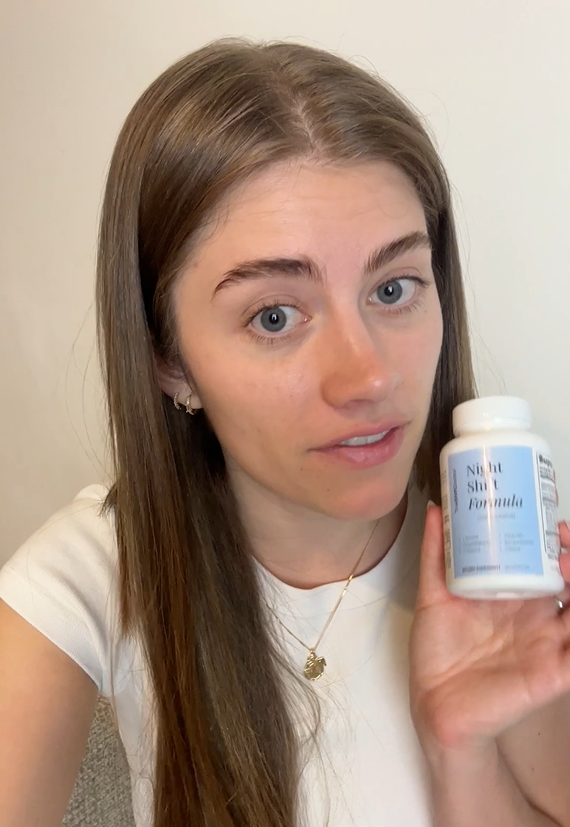
"After 3 weeks I feel like I am more present in my time off for my daughter. These have been pretty good for me."
And here's the honest part
I know what years of "just drink another coffee" does to a person. You're probably braced to be told to wait it out and be patient.
So I won't insult you with the word every energy product on the shelf throws around. Everything in that aisle promises you clean, crash-free energy. You got the jitters and the 3am crash anyway.
This isn't a stronger coffee. It isn't an energy drink. There's nothing in here to spike you, whip you, or leave you crashing at 4am.
It puts back what the shift drains, and lets your brain do the rest.
Here's what tends to happen.
First shift
The alertness feels different. Cleaner. No spike, no crash.
End of week 1
The 3am wall doesn't hit as hard.
Weeks 2–3
The fog lifts faster and your days off start to feel like yours again.
Month 2
As the Bacopa builds, a lot of people say the same quiet thing: they feel like themselves again. Not wired. Not medicated. Just more like the person they were before nights started taking it out of them.
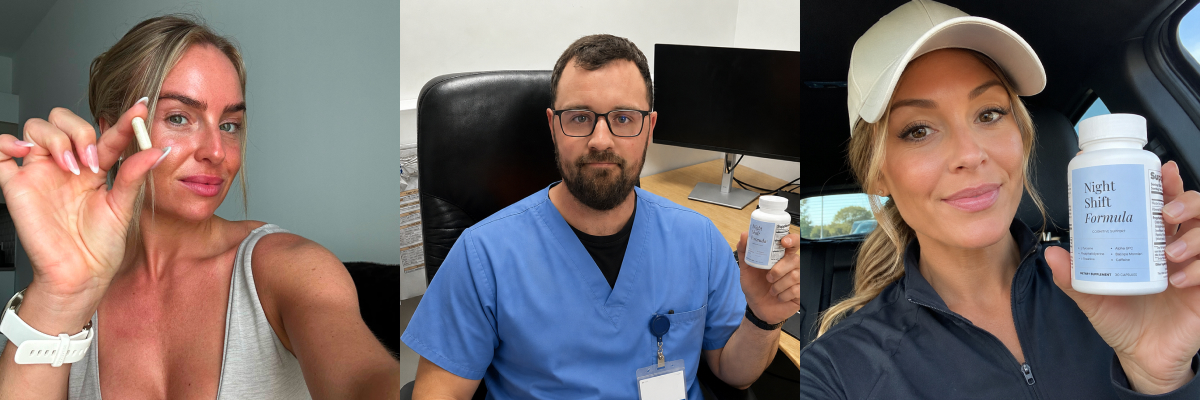
Let me do some honest math with you
Think about what the Night Shift Drain has already cost you.
A year of coffee you don't even enjoy anymore. Energy drinks two at a time. The supplement you tried once and shoved to the back of the cupboard.
Then add up all the years.
And that's only the money. It doesn't count the days off lost to recovery. The plans you cancelled. The version of you that showed up exhausted while the people you love got the leftovers. The quiet, daily weight of not trusting your own brain at 3am.
You've already paid more for this problem than you'll ever pay to actually deal with it.
Less than a quarter of what you're already spending on coffee.
And here's the part that should make this easy. You don't have to take my word for it.
Take the 30 days and find out for yourself.
It's backed for a full 30 days. Take it at the start of every shift. Give your brain the weeks it needs. If you don't feel the difference, if your nights don't start getting easier, you email us and every dollar comes back. You don't even send the bottle back.
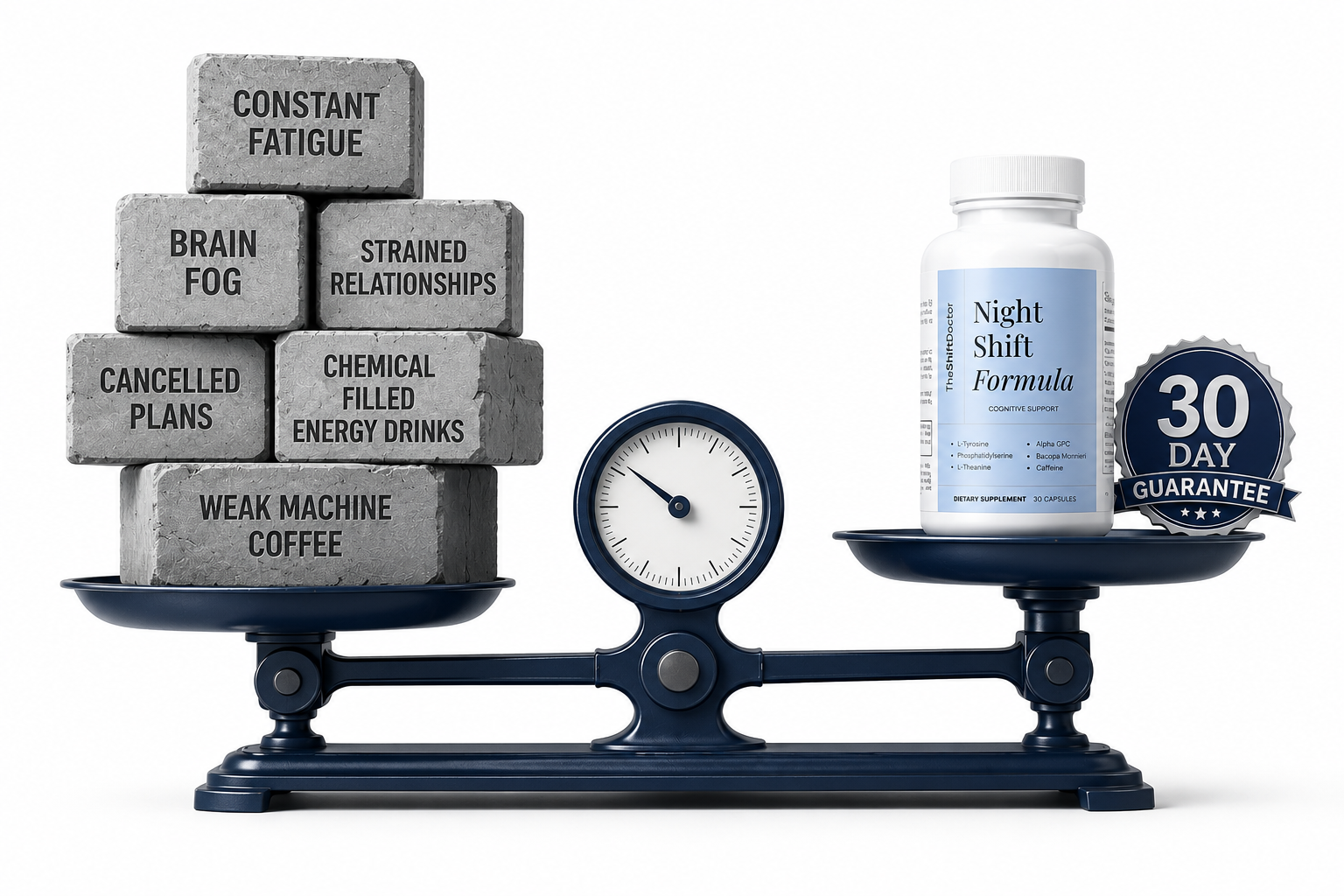
Less than 1.5% of people ever ask. But the door is right there if you do.
The coffee aisle never offered you your money back. The energy drink company never did either.
This is the first thing in years willing to bet that your brain can come back, and to put its own money on it.
So the only real question left is the one I started with. Do you want to spend another year forcing it? Another year of coffee that works less each time, dreading 3am, losing your days off to recovery?
Or do you want to find out what happens when you put back what the shift's been taking?
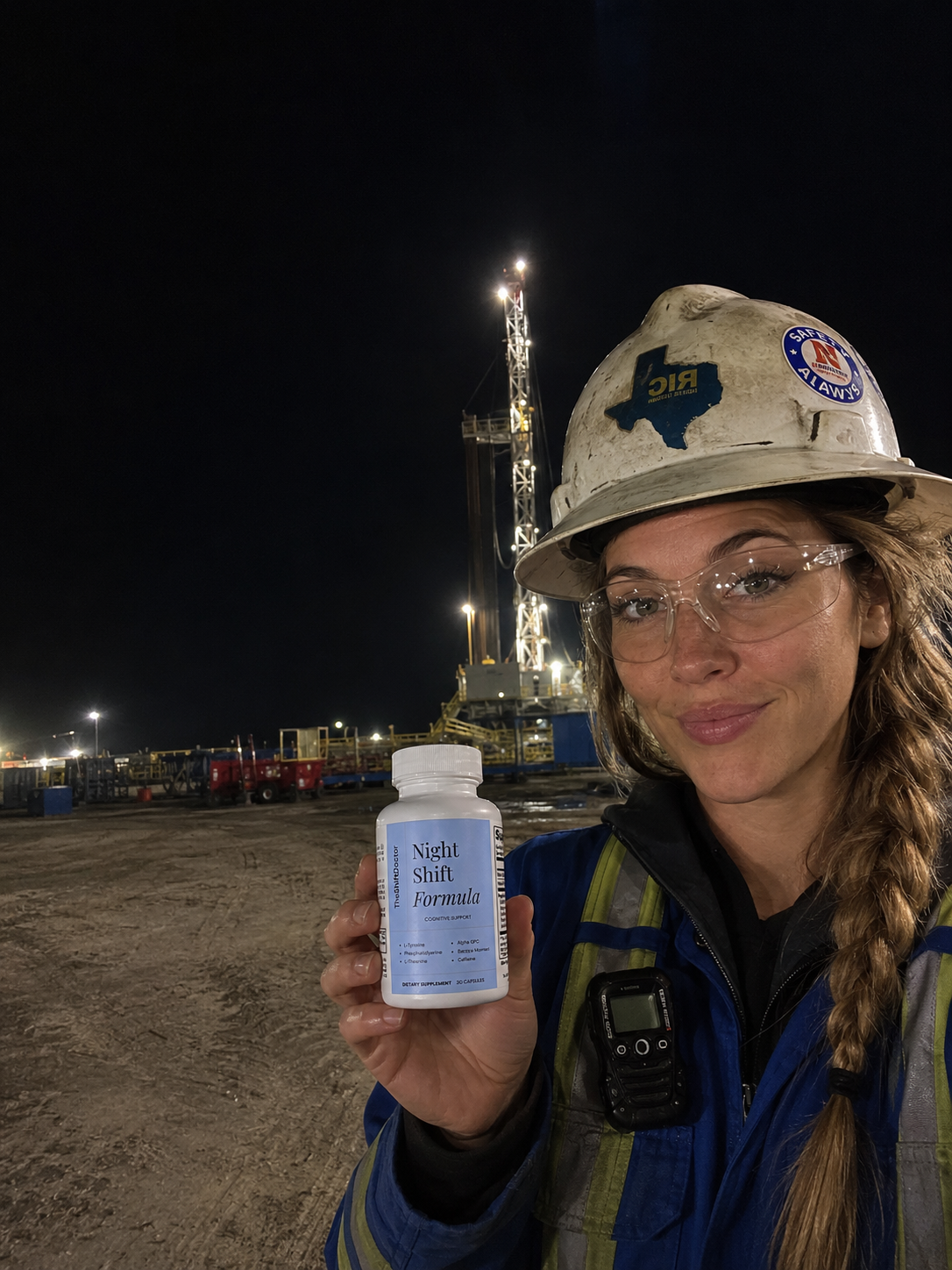
As low as $1.07 / day · Backed for 30 days
- ✔ 30-Day Money-Back Guarantee
- ✔ Non-GMO
- ✔ Made in the USA, third-party tested
Frequently Asked Questions
These statements have not been evaluated by the Food and Drug Administration. This product is not intended to diagnose, treat, cure, or prevent any disease. Night Shift Formula supports cognitive function; it does not prevent workplace errors, accidents, or injuries, and is not a substitute for adequate rest or safe working practices. Individual results vary. Statistics on error and accident rates refer to night shift work in general (OSHA/CDC-NIOSH), not to this product. Customer survey figures reflect responses from Night Shift Formula customers. If you are pregnant, breastfeeding, taking medication, or have a health condition, consult your doctor before use. Sources: OSHA, "Long Work Hours, Extended or Irregular Shifts, and Worker Fatigue"; CDC/NIOSH training materials on shift work; Neri et al. 1995; Starks et al. 2008; Bacopa monnieri meta-analyses.